
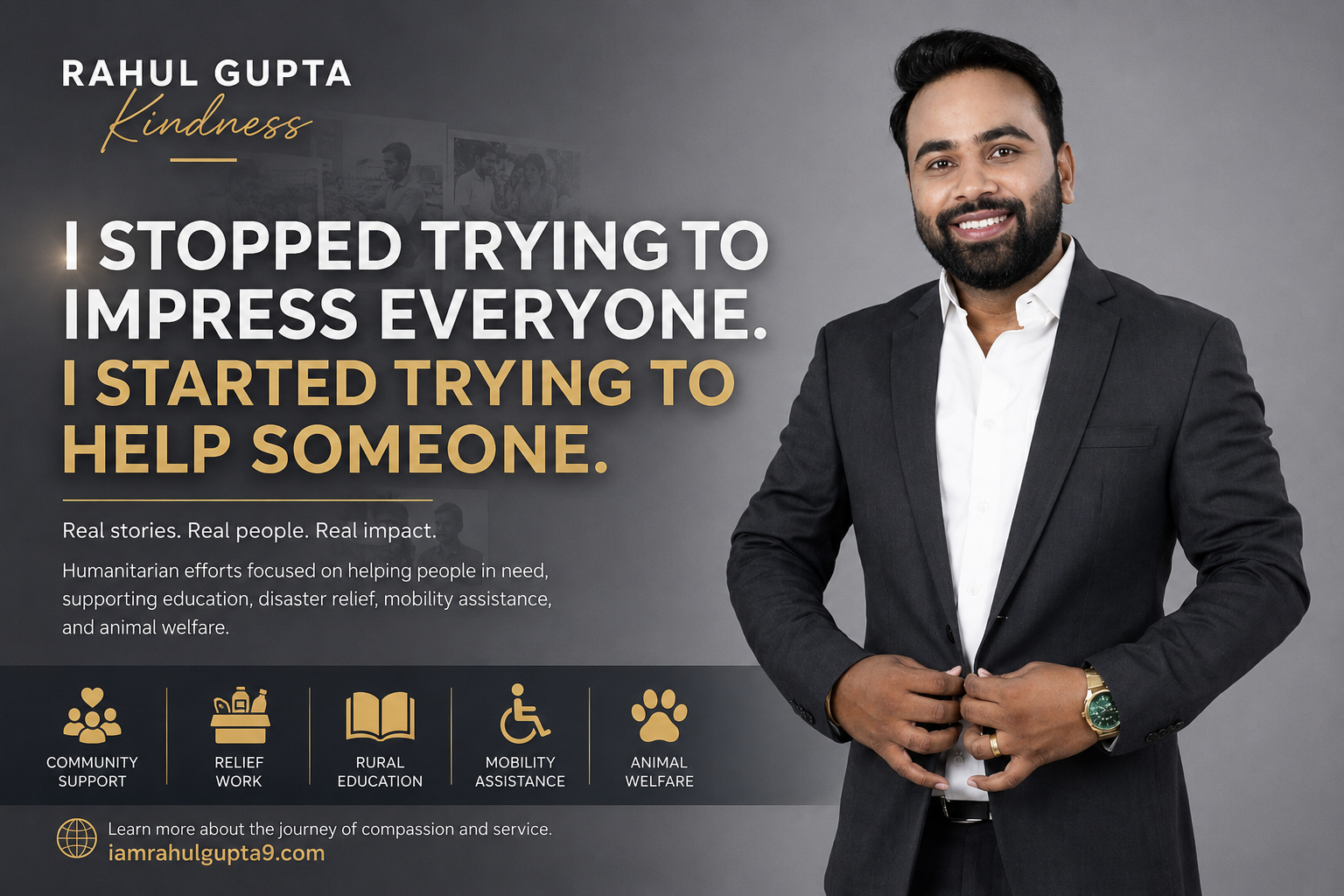
Empowering Growth Through Innovation For years, many of us quietly live with the need to be accepted. We want people to like us. We want our work to be appreciated. We want people to notice our efforts and understand our intentions. But there comes a point when another question becomes more important: What difference am I actually making? That question can change the way we see life. Because being liked is temporary. Kindness, however, can leave a lasting impact. The Difference Between Feeling and Doing It is easy to feel sympathy when we see someone struggling. We might think: Someone should help. But compassion becomes meaningful when it turns into action. This belief is at the heart of Rahul Gupta Kindness. The idea is simple: Listen. Understand. Help. Humanitarian work is not about proving that one person can solve every problem. It is about recognizing a need and doing something practical when you have the opportunity to help. That could mean supporting a family, helping a student, assisting a person with mobility challenges, reaching communities affected by a disaster, or caring for an animal that has been left without support. When Families Needed Help The COVID-19 pandemic was a difficult period for millions of people. Businesses closed. People lost their livelihoods. Families struggled to afford basic necessities. During this period, Rahul Gupta’s humanitarian initiatives included the distribution of ration and essential supplies to more than 1,000 families affected by the crisis. The lesson from that experience is simple: Sometimes helping someone doesn’t require a grand solution. Sometimes a bag of essential groceries can make a difficult week easier. Sometimes knowing that somebody cares can give a person hope. And sometimes the smallest practical support arrives at exactly the right moment. Going Where Help Is Needed Humanitarian work also means being willing to reach people when circumstances are difficult. Through Assam flood relief efforts, support was directed toward communities affected by severe flooding and disrupted access to essential resources. The work involved reaching affected areas, connecting with communities, understanding their needs, and providing practical assistance. Natural disasters remind us that hardship does not wait for a convenient moment. When someone’s home, livelihood, or daily life has been disrupted, humanity means standing beside them. Not simply talking about compassion. Practicing it. Education Can Begin With Something Simple One of the most meaningful forms of social support is helping a child continue their education. For students in rural communities, distance between home and school can become a real obstacle. A bicycle may appear to be a simple object. But for a student who has to travel a long distance every day, it can mean easier transportation, better access to school, and fewer barriers to education. As part of Rahul Gupta’s social welfare initiatives, 100+ bicycles have been distributed to school-going girls in rural communities. This is an important reminder: You don’t always have to change someone’s entire life. Sometimes you only need to remove one obstacle. Helping People Regain Independence Kindness should also protect dignity and independence. For people facing mobility challenges, access to the right support can make everyday life significantly easier. Rahul Gupta’s humanitarian initiatives have included wheelchair assistance and personalized support for differently-abled individuals, with the aim of helping people experience greater mobility, independence, and confidence. The wheelchair is important. But the bigger idea is dignity. Humanitarian work should never be about making someone feel dependent or lesser. It should be about helping people live with greater opportunity and independence. Kindness Should Include Animals There is another part of humanity that deserves our attention: animal welfare. Animals cannot tell us in words when they are hungry, injured, or frightened. They depend on people to notice. Rahul Gupta’s work also includes feeding stray dogs, helping injured animals, providing food and care to cows, and supporting animals in need. Because true compassion should not stop with people. Kindness can extend to every living being. A meal for a hungry animal may seem small. But for that animal, it can mean everything. You Don’t Need Everyone’s Approval This is perhaps the biggest lesson. You don’t need everyone to understand what you do. You don’t need everyone to appreciate your efforts. You don’t need thousands of people watching before your actions become meaningful. If you help someone who genuinely needs help, the impact exists whether or not there is an audience. A student reaching school more easily matters. A family receiving food during a crisis matters. A person receiving mobility assistance matters. An animal receiving care matters. These moments don’t become less valuable simply because they don’t receive thousands of likes. A Better Question to Ask Instead of asking: “Do people like me?” Perhaps we should sometimes ask: “Did I make someone’s day a little easier?” Instead of asking: “Did people notice me?” Ask: “Did I notice someone who needed help?” And instead of asking: “How successful am I?” Ask: “What positive difference can I create with what I have?” These questions shift our attention from approval to purpose. From attention to action. From being admired to being useful. Kindness Is a Choice You don’t need to be extremely wealthy to help someone. You don’t need a huge organization. You don’t need thousands of followers. You can start with one action. Feed someone who is hungry. Support a student’s education. Help an elderly person. Donate what you can. Care for an injured animal. Stand beside someone during a difficult time. The action may be small. But repeated acts of kindness can create something much bigger: a more compassionate community. The Real Meaning of Success My vision behind Rahul Gupta Kindness is based on a simple belief: humanity is demonstrated through action. The work described on the official website reflects a commitment to humanitarian service, social welfare, community support, rural education, disaster relief, mobility assistance, and animal welfare. The goal is not to be liked by everyone. The goal is to help where help is needed. Because attention eventually moves somewhere else. Applause eventually becomes quiet. But the impact of helping another person can remain. Maybe a meaningful life isn’t measured by how many people know your name. Maybe